

Making Sense of Nutrition Advice in a Noisy World
If you’ve ever felt overwhelmed trying to figure out what to eat, you’re not alone.
One day carbs are the problem. The next day it’s sugar. Then seed oils. Then processed foods. Add in social media influencers, trending diets, and constant headlines about new research—and it’s no wonder nutrition can feel confusing.
For many people, this confusion doesn’t just stay in the background—it can lead to stress, second-guessing food choices, or even feeling like you’re “doing it wrong.”
Let’s take a step back and look at why nutrition feels so complicated right now—and how to approach it with more clarity and confidence.
1. Social Media Is Loud—But Not Always Accurate
Nutrition advice is everywhere, especially on social media. While some creators provide helpful, evidence-based information, many do not have formal training in nutrition.
It’s easy to come across confident, persuasive messaging that sounds credible—but may be incomplete, misleading, or even harmful.
Quick tip:
If someone is giving strong nutrition advice, it’s worth asking:
What are their credentials?
Are they speaking in absolutes?
Are they trying to sell something?
2. Nutrition Research Isn’t Always Simple
You might see headlines like:
“Coffee is good for you”
“Coffee is bad for you”
So… which is it?
The truth is, nutrition research is nuanced. Study results can vary based on:
Study design
Sample size
Population studied
How data is interpreted
One study rarely tells the full story. Recommendations are based on patterns of evidence over time, not a single headline.
3. Oversimplified Messages Miss the Bigger Picture
You’ve probably heard statements like:
“Carbs are bad”
“Don’t eat after 8 PM”
“Sugar is toxic”
These types of messages reduce nutrition down to one nutrient or rule—but real nutrition is about overall patterns, not isolated pieces.
When we focus too narrowly, we miss important context like:
Balance
Variety
Individual needs
Cultural and lifestyle factors
Food is more than a single nutrient—and your health is more than a single choice.
4. Profit Can Influence Messaging
The nutrition space includes:
Supplements
Programs
Meal plans
Products
And while not all are problematic, it’s important to recognize that financial incentives can shape how information is presented.
This doesn’t mean all research or products are unreliable—but it does mean it’s wise to stay curious and discerning.
5. Health Is About More Than Just What You Eat
There’s a common message that health is entirely within our control—that if we just “eat right,” everything will fall into place.
But health is influenced by many factors beyond food, including:
Genetics
Access to food
Socioeconomic factors
Life circumstances
Stress and environment
Nutrition matters, but it’s only one piece of a much bigger picture.
So… What Can You Do With All This Information?
Instead of trying to follow every new rule or trend, it can be helpful to shift your focus toward what is consistent and sustainable.
Some gentle anchors to come back to:
Eating regularly throughout the day
Including a variety of foods
Noticing how your body feels
Letting go of all-or-nothing thinking
You don’t need to have perfect nutrition to support your health.
A Final Thought
If nutrition feels confusing, it’s not because you’ve failed—it’s because you’re navigating a space that is often confusing.
Clarity doesn’t come from chasing every new piece of advice. It comes from slowing down, tuning out the noise, and building a way of eating that is steady, supportive, and aligned with your life.
If you’re feeling stuck or unsure where to start, working with a registered dietitian can help you sort through the noise and find an approach that truly fits you.

Tools of Faith in Recovery
As a Christian, your relationship with God can be one of the most powerful parts of your recovery journey.
In the previous blog, I reviewed how each journey toward healing from an eating disorder is different. How faith shows up in your journey will be unique for you and God’s work in your life.
Here are a few things to consider as you explore how faith intersects eating disorder recovery.
Consider these questions. Are you willing to bring God into your relationship with food and body? Are you willing to make Him a part of your recovery?
If your answer is, “Yes”, seek Him daily. Pray. Read the Bible. Know His promises.
If your answer is, “I’m not sure”, my encouragement is the same. Pray. Read the Bible. Seek God.
If you are reading this blog, my guess is that you are considering what it would look like to bring God into your journey. If so, read on.
Here are a few things to consider and some scripture to meditate on and pray about.
The first is identity. Often eating disorders overtake our sense of who we are and how we are valued. Exploring what your thoughts and beliefs say about your identity and comparing them to what God says in scripture can help you understand your value, worth, and purpose. Here are a few verses to consider:
John 1:12 Yet to all who did receive Him, to those who believed in His name, He gave the right to become children of God.
1 John 3:1 See what great love the Father has lavished on us, that we should be called children of God! And that is what we are!
Ephesians 1:7-8a In him we have redemption through His blood, the forgiveness of sins, in accordance with the riches of God’s grace that he lavished on us.
We are valued, redeemed, loved by God!
The second is grace. Grace is not an excuse to continue in our behaviors. Grace is both abundant in mercy and forgiveness when we fail and power through God’s work in our lives to continue to follow and be obedient to Him for His glory and our good.
2 Corinthians 12:9 But He said to me, “My grace is sufficient for you, for my power is made perfect in weakness”.
Ephesians 2:8-9 For it is by grace you have been saved, through faith – and this is not from yourselves, it is the gift of God – not by works, so that no one can boast.
Hebrews 13:8-9 Jesus Christ is the same yesterday and today and forever. Do not be carried away by all kinds of strange teachings. It is good for our hearts to be strengthened by grace, not by eating ceremonial foods, which is of no benefit to those who do so.
Hebrews 4:16 Let us then approach God’s throne of grace with confidence, so that we may receive mercy and find grace to help us in our time of need.
The third is Hope. Where do you put your hope? Eating disorders tend to have us hoping in our body size or restriction or eating or rules around food. Has this hope fulfilled its promise? Scripture speaks to where we have a hope that is sure and true.
Psalm 119:114 You are my refuge and my shield; I have put my hope in your word.
Jeremiah 17:7-8 But blessed is the one who trusts in the Lord, whose confidence is in Him. They will be like a tree planted by the water that sends out its roots by the stream. It does not fear when heat comes; its leaves are always green. It has no worries in a year of drought and never fails to bear fruit.
Matthew 11:38 Come to me, all who labor and are heavy laden, and I will give you rest.
Philippians 1:6 And I am sure of this, that he who began a good work in you will bring it to completion at the day of Jesus Christ.
These are just a few of the many truths and promises that God holds for your life. I encourage you to pick a few verses that you connect too and repeat them to yourself.
Today as you consider next steps,
Pray at meals.
Repeat His promises when fear and doubt arise.
Seek Him.
Join with others in prayer and study God’s word.
Be encouraged in your faith and recovery!
Here are a few resources to continue in your faith in recovery:
Transformed: Eating and Body Image Renewal God’s Way by Jennifer Smith Lane
Hope for the Hollow: A Thirty Day Inside Out Makeover for Women Recovering from Eating Disorders by Jenna Morrow
Souls Like Stars: Renew Your Mind, Heal Your Heart, Unveil Your Shine by Margaret Nagib

Tools of Recovery
“To stay in recovery, you must be responsible for finding your own motivation. Remember, motivation may not be easy to come by at first. It will probably be a very small, timid part inside of you. When you find it, let that part be in charge. Let the minority rule and lead you to a life you never dreamed was possible” - Jenni Schaefer
Over the last three weeks, I have shared information on identifying and finding resources for healing from an eating disorder. Today, let’s take a look at what tools for recovery are available to you. Every recovery journey is unique and each person will have their own story and use their own “toolbox”. Embrace your story and your journey!
#1: The recovery journey begins with you. I would argue that you, the individual struggling with disordered eating and its effect on your life, are the most valuable and useful tool. Here are three reasons you are a tool for recovery.
· First, nobody knows your journey and lived experience as much as you do. You know your history with food, your circumstances, your beliefs and fears, your hardships and victories, your motivators. This is your lived experience that enables you to work with other tools available to identify barriers and beliefs and work toward change. You are the most important part of the team and your insight, knowledge, and understanding matter.
· Second, you have the control and the power. Often in eating disorder recovery, we use behaviors to have a sense of control. However, these behaviors leave us feeling weak, stuck, and with little to no control in our lives. The work is to use your resilience and strength along with other support and tools to take back your life and your control. Sometimes, this may mean a surrender to the recovery process – you have the control to surrender to the process.
· Finally, this is your journey and your journey alone. There are others here to support you, encourage you, educate you, hold you accountable, believe in you, but no one can make you recover or do the work for you.
#2: Your support system. Building your support system can also help you in your journey. Take a look at those around you. This may be friends, family, groups, faith-based communities, people who are like-minded and present in your life and trustworthy. Engaging this support may look like spending time with them or talking to them. It may mean having them support you in meals or remind you of your value. It may or may not mean sharing your journey, but each may have a role in supporting you - directly or indirectly.
You may ask, “What if I don’t have a support system or my system is broken?” Often people find themselves feeling alone on this journey. Please know you are NOT ALONE and do not need to be alone. If you are having difficulty finding a support system that helps you in your journey, use the tools below to begin your process of building support.
#3: Your Treatment Team and Levels of Care. Building a team of knowledgeable and trustworthy “experts” gives consistency, support, and help in your journey. What does a treatment team look like:
· Therapist: A therapist provides a non-judgmental, therapeutic relationship to explore the psychological, emotional, relational, and behavioral drivers of the eating disorder. Eating disorders are rarely “just about food” and by incorporating therapy techniques and skills, a therapist will work with you to process and heal. Therapy techniques often used include:
o Dialectical Behavior Therapy (DBT)
o Cognitive Behavior Therapy (CBT)
o Acceptance and Commitment Therapy (ACT)
o Eye Movement Desensitization and Reprocessing (EMDR)
o Family Based Treatment (FBT)
o Others
· Dietitian: A dietitian’s primary role is nutrition rehabilitation, support, and education. Dietitians specializing in eating disorders will provide guidance for eating and nutrition counseling to help move through barriers, beliefs, and fears around food. This process can be individualized to each person’s needs and preferences.
· Psychiatrist: Often, medication management can be helpful in moving through some of the difficulties in eating disorder recovery. Eating disorders are often a part of other mental health conditions such as anxiety, depression, trauma, and substance use. A psychiatrist can help manage medications to provide support in all mental health conditions including eating disorder recovery.
· Medical physician: Eating disorders leave individuals susceptible to physical and, at times, life threatening conditions. Having a trusted physician provides medical expertise and exams to ensure safety and health through the recovery process.
This team of experts and support can be found at all levels of eating disorder care. Determining what level of care is right for each person can be done through an outpatient provider or a call to a treatment center. The levels of care for eating disorder recovery are as follows:
· Inpatient: Highest level of care used for medical and feeding stabilization.
· Residential: Twenty-four hour care for individuals needing support to decrease and abstain from behaviors. This level of care provides structure, support, therapy and accountability for healing
· Partial Housing Program (PHP): These programs provide day structure while individuals go home in the evening and often weekends. This is helpful for individuals who can manage behaviors at home but continue to need consistent structure and support with increased therapy and group therapy sessions.
· Intensive Outpatient Program (IOP): Where PHP programs run 5-7 days a week for 6-8 hours a day, IOP programs run 3-5 days a week for 3-5 hours a day. This level of care continues to provide structure, therapy, and support while individuals aim to use skills and avoid behaviors at home.
· Outpatient: Outpatient levels of care provide consistent support 1-2 times a week with each provider to provide accountability, support, education, therapy, and monitoring.
Each individual will be unique in their journey through levels of care. At times, levels of care may be repeated or skipped depending on each person’s need.
#4: Spiritual and Faith-Based Tools. Eating disorder treatment works best when all aspects of our well-being are recognized and incorporated into treatment. Spirituality in the broad sense refers to how each person understands meaning, purpose, connection, and transcendence. A powerful tool can often be one’s spirituality and faith. A following blog will discuss aspects of Christian faith that can be a helpful tool in recovery for those who embrace Christian faith.
#5: Other Tools. Each recovery story will have their own use of the tools above as well as many other aspects that assist in finding healing. Use the tools that work for you and are available for you. If you try something and it did not go as planned, don’t be afraid to try again. Recovery can happen quickly, but it can also take time. Often the behaviors, thoughts, and beliefs that you are working to change have been a part of life for years and it will take time to heal. No matter how many times you have tried or how long you have struggled with an eating disorder, be encouraged. Healing is Possible!
If you would like to begin this journey and need some help getting started, reach out! Call, email, or complete the contact form and allow me the privilege of supporting you on your journey.

Sugar - Navigating the Facts
Many claims can be found regarding the harms of sugar. Ranging from general inflammation to immune system damage, sugar is often made out to be the villain. Well-meaning people or even organizations make recommendations like, “Avoid sugar!” or “Sugar is bad!”. Let’s take a look at what sugar actually is, and how it functions in our bodies.
What Is Sugar, Really?
Sugar is a type of carbohydrate. Carbohydrates are one of the body’s primary sources of energy, especially for the brain, muscles, and nervous system. Sugar is easily converted into glucose, the body’s main energy source which allows the organs to function properly.
Sugar isn’t useless or empty—it serves important roles:
Provides quick energy, especially for the brain
Supports physical activity and recovery
Improves satisfaction and enjoyment of food
Helps regulate appetite when included in balanced meals
Sugar occurs naturally in many foods, including:
Fruit (fructose)
Milk and yogurt (lactose)
Vegetables and grains (small amounts)
Sugar can also be added to foods for taste, texture, and preservation. Chemically, the body processes sugar the same way whether it comes from fruit, honey, table sugar, high fructose corn syrup, molasses, dextrose, or other sources.
Why Does Sugar Gets a Bad Rap?
Excess amounts of sugar are linked to a variety of health concerns including heart disease, brain dysfunction, diabetes, and more. Often, these concerns are oversimplified resulting in misleading statements and beliefs.
When it comes to sugar and health, researchers continue to search for answers to questions like: Why do we see these links? Is the negative outcome truly the effect of sugar? How do we take this information and apply it to our lives? Much of our research around sugar comes from correlation data. Remember, associations and links do not prove causation.
Here are some of the oversimplified messages regarding sugar intake and a deeper look at the evidence:
Sugar leads to elevated blood glucose which can damage the vascular system and cause inflammation.
For some individuals, including those with diabetes and alterations in metabolic health, eating patterns including an excessive or unbalanced intake of sugar can lead to increased glucose levels and insulin resistance. Over time, this can lead to negative effects on the cardiovascular system including heart disease, stroke, high blood pressure, and kidney disease, and low level inflammation. The average person even with diabetes and metabolic alteration can have sugar in moderation and balance.
Sugar leads to an unhealthy balance of harmful bacteria in the gut.
Ongoing research indicates that maintaining a healthy microbiome has been linked to decreased risk of disease. There are many things that affect the microbiome including food restriction, balance of nutrients, sleep, and stress. While there is indication that excessive sugar intake may contribute to negative alterations in the microbiome, sugar alone is not a contributor to an imbalanced microbiome when consumed in balanced patterns over time.
Sugar leads to weight gain and therefore poor health.
Weight gain is not as simple as the abundant intake of one nutrient. Many factors including genetics, stress, dieting, hormone levels, patterns of eating, and more affect one’s weight. Sugar alone is not the driver of weight gain. Also, refer to the previous blog on a weight neutral approach. Many things other than weight affect overall health and well-being.
Eating sugar leads to dementia and poor brain health.
Once again, the evidence around this remains under investigation. While there are findings suggesting a negative relationship between sugar and brain health, the results come from excessive amounts of sugar and an inadequate intake of other nutrients such as omega-3 fatty acids, fiber, certain vitamins and minerals, as well as antioxidants. Allowing sugar in moderation while including other nutrient dense foods continues to point to overall health and well-being including brain health.
Sugar alone does not cause diabetes, heart disease, poor brain health or other chronic conditions.
Remember, health outcomes are influenced by more than just food and include:
Genetics
Stress
Sleep
Access to healthcare
Socioeconomic factors
Overall dietary patterns—not single foods
I have worked with individuals who need diets higher in sugar in order to care for themselves. This may be related to health conditions, circumstances, and availability of food. Sugar is and always will be a source of life-giving energy for our bodies.
For most people, eating sugar can and should be part of a balanced, satisfying eating pattern. Blaming any one nutrient for disease is not interpreting the research appropriately and may lead to distraction from other, more impactful contributors to health.
Is Sugar Addictive?
I compassionately and respectfully approach this question after working with many individuals around food relationships, reasons for eating, and cravings. Food addiction continues to be discussed and contemplated among experts. For some individuals the compulsion toward sugar may feel addictive, unhealthy, and out of control. Part of nutrition counseling is to help determine why this might be occurring and how to navigate toward a more healthy, peaceful relationship with food. Let’s look at some of the facts we know around sugar and cravings.
Some individuals may be more genetically inclined toward sugar or have a “sweet tooth”. Research links certain chromosomes with a higher desire for sweet foods.
There is also evidence that infants naturally prefer sweet foods over other foods from birth. This may be a protective mechanism as our brains and organs function best on glucose, which we most quickly access through sugar.
Another area of research demonstrates that the level of exposure to sweet foods may increase our desire for sweet foods as we age.
Finally, we know that sugar activates certain neurotransmitters in our brain including dopamine, serotonin, and others, giving us pleasure, happiness, and calmness.
None of these aspects are inherently “bad” or concerning. However, if someone is struggling with excessive cravings toward sugar, practicing gentle curiosity to explore how their relationship with sugar has evolved throughout their life can help them choose a path forward.
The main problem with the food addiction model is that often intense cravings or drives toward certain foods are the result of overall inadequate intake. The well-established restrict – rebound cycle demonstrates the body’s mechanisms for survival. When we do not eat regular meals throughout the day, or go through periods of restricting, dieting, or low intake, our bodies adapt by increasing our drive toward food – typically high sugar and high fat foods. I often see this when working with those who have eating disorders. While restricting intake, they develop a newly found love for baking sweets or watching food shows. Their resilient bodies are steering them toward food because they are not receiving enough nutrition.
One does not have to be at this level of restriction to feel a tug toward food. Because we use calories all day and night, natural hormones will drive us toward sugar and other foods if we do not feed our bodies well. While this may feel intensely bothersome, it is an amazing adaptation toward survival.
How do we move forward in our use and relationship with sugar?
The primary message is, SUGAR IS NOT BAD OR UNHEALTHY, and if one is craving sugar – this may be a signal that something is missing in their eating patterns. Don’t be afraid to enjoy your favorite foods that contain sugar!!
Here is what works for many people:
Have regular meals with a variety of food groups throughout the day. Our bodies run a 3–4-hour cycle in the metabolism and use of glucose. Eating regularly throughout the day maintains a balanced blood sugar curve which may decrease intense cravings and allow a moderate and appropriate intake of sugar.
Pairing sweets and high sugar foods with other food groups including protein and fiber containing foods helps your body slow down digestion and maintain appropriate blood sugar levels and overall intake. Using mindful eating techniques may also help you enjoy food and can moderate the consumption of sugar.
Avoid dieting and restricting food intake. While this may work in the short term, it may lead to an increase in intense food cravings.
Finally, consider limiting sugar sweetened beverages to one or less daily. This does not mean you can’t have your favorite soda or sweetened coffees, but you can be intentional to use other beverages including water throughout the day to benefit your overall health.
If you feel confused on the messages around sugar, feel addicted to sugar, or are unsure about how to incorporate your favorite sweets into a healthy eating pattern, reach out for nutrition counseling and we can be gently curious, aware, and intentional together!
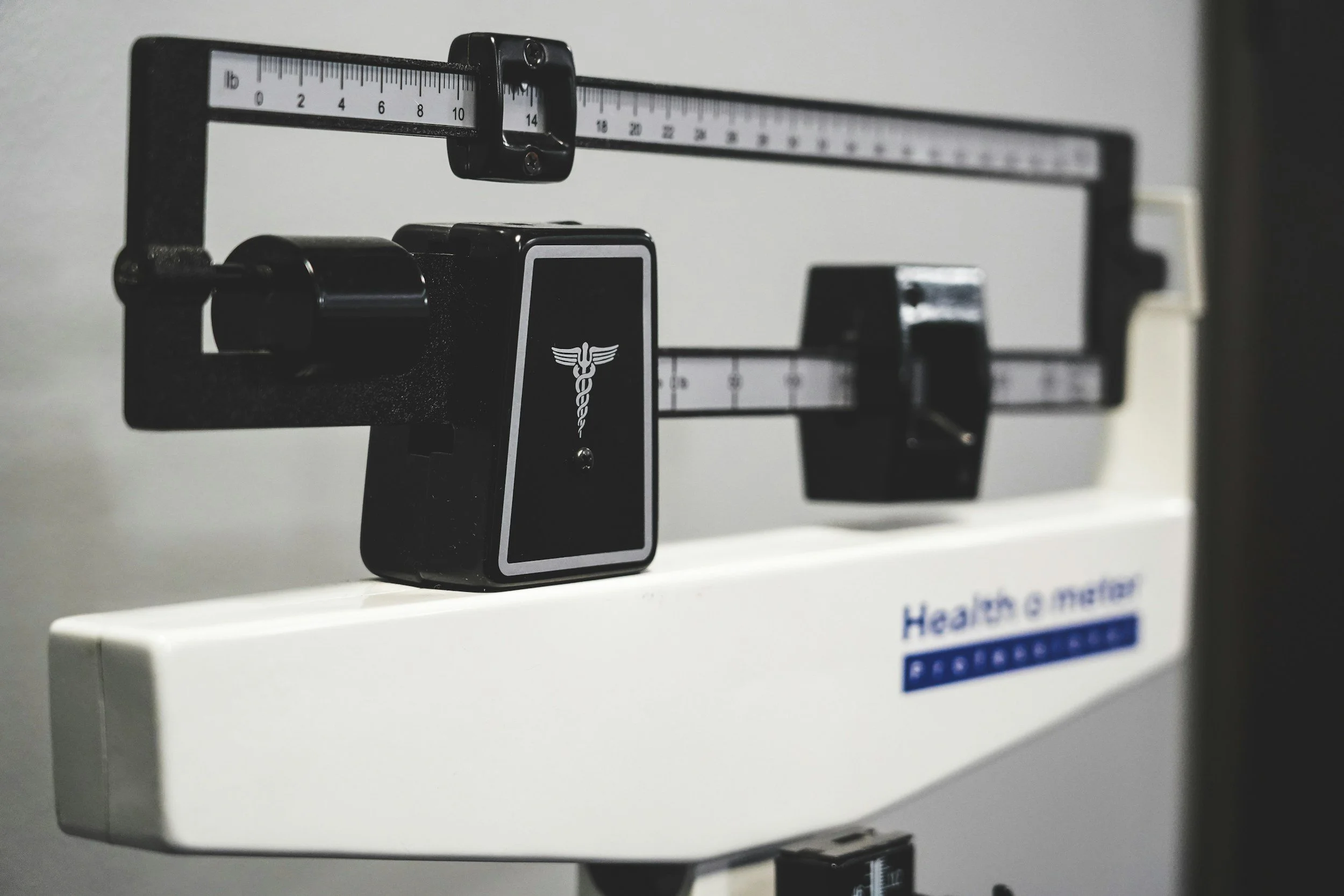
Weight Neutral, Non-Diet
As a dietitian, nutrition principles founded on science and evidence drive nutrition counseling and education. Two words that have come to define a method of providing nutrition care are weight neutral and non-diet approaches. So let’s break down what this method is and why it can be an important way to navigate food and weight.
A weight-neutral, non-diet approach refers to a method of nutrition counseling that focuses on overall health, well-being, and behavior change without the rigid rules of dieting or a focus on weight or weight loss. Principles of this approach include behaviors that focus on sustainable eating patterns supporting health, addressing nourishment needs and benefits, attunement to body signals, and respect and care for our bodies. Often a weight neutral approach will focus not only on eating, but also movement, stress, and sleep leading to a wholistic approach toward health.
Weight-neutral approaches acknowledge a potential for harm in a strictly weight loss focused approach. This harm has been shown as the effects of weight stigma, psychological distress caused by rigid eating patterns or weight loss and regain, and potential increases in disordered eating behaviors.
Instead of calorie counting or a rigid set of rules around food and movement, non-diet approaches may include education on nutrition, planning balanced meals, mindful eating, behavior therapy skills, and body attunement to support improvements in health. Here is a simple way to view the difference between counseling methods focused on weight loss and a non-diet, weight neutral approach:
Weight Centric or Weight focused approach:
Weight loss as the goal
Regular weigh ins
Food rules and restriction
Compliance driven
Weight neutral approach:
Health behaviors as the goal
Use of the scale is optional
Long term, realistic, flexible approaches determined in collaboration
Use of non-diet methods which may include intuitive eating principles, mindful eating, meal planning, nutrition education, and more
Who may benefit from this approach?
Individuals of all sizes who would like to improve their health and relationship with food
Those with a history of chronic dieting or weight cycling
Those with a history of disordered eating
Those aiming to improve digestive issues, cardiovascular health, metabolic health, improve blood sugar control, and maintain kidney function
This approach can also be helpful in those pursuing weight loss, including those using weight loss medications such as the GLP-1 medications. While weight neutral counseling will not emphasize weight, it can support nourishment and relationship with food while navigating weight loss with other providers.
What is the evidence for this approach?
Research on the benefits of weight loss may appear to be evidence that weight loss is indeed necessary. However, several studies demonstrate the benefits of movement as well as eating patterns including Mediterranean styles and DASH patterns for decreasing risks of illness and death independent of weight loss. There is also question in the research on how much weight or fat mass in itself contributes to disease. One meta-analysis of 82 studies published in 2024 recognized risk in weights at the very low or very high ends of the spectrum; however, the weights at the lowest risk of illness and death ranged from normal to mildly obese BMI (Nowak MM et al). This leads once again to question to what extent do we need to focus on weight loss as a means of improving health.
Other evidence points to the difficulty in sustaining long term weight loss. Evidence points to high percentages of weight regain after loss especially when looking at outcomes 2 years or more after a weight loss intervention. There is also concern in the research on the risk of weight cycling on health which may lead to increased risk of health related concerns. A review of the research in 2007 looked at the evidence for the use of diets for weight loss Researchers looked at both randomized controlled studies and observational data. Their conclusions were “It is clear that dieting does not lead to sustained weight loss in the majority of individuals, and additional studies of the effects of dieting on weight are not needed” (Mann T. et al). Researches however, did conclude that additional research is needed on how diets may improve health parameters.
In conclusion, the role of weight in health is complex as is our relationships with food. A viable, realistic option may be a weight neutral, non-diet approach for health and well-being. Nutrition counseling utilizing these methods may help improve overall well-being leading to physical and psychological improvements.
References:
Levinson JA, Clifford D, Laing EM, Harris CL, Slagel N, Squires ND, Hunger JM. Weight-Inclusive Approaches to Nutrition and Dietetics: A Needed Paradigm Shift. J Nutr Educ Behav. 2024 Dec;56(12):923-930. doi: 10.1016/j.jneb.2024.07.007. Epub 2024 Aug 30. PMID: 39217533.
Nowak MM, Niemczyk M, Gołębiewski S, Pączek L. Impact of Body Mass Index on All-Cause Mortality in Adults: A Systematic Review and Meta-Analysis. J Clin Med. 2024 Apr 16;13(8):2305. doi: 10.3390/jcm13082305. PMID: 38673577; PMCID: PMC11051237.
Mann T, Tomiyama AJ, Westling E, Lew AM, Samuels B, Chatman J. Medicare's search for effective obesity treatments: diets are not the answer. Am Psychol. 2007 Apr;62(3):220-33. doi: 10.1037/0003-066X.62.3.220. PMID: 17469900.